What the interviewer is really asking
Nobody expects a perfect candidate. They want to see self-awareness (you can name a real weakness), honesty (it is not a disguised strength), and growth (you are doing something about it). The weakness itself matters less than how you talk about it.
A structure that works: name it, show it, fix it
- Name a real weakness that is not essential to the job. One short sentence.
- Show it briefly. One concrete moment where it got in the way.
- Fix it. What you do now, and a sign that it is working.
Keep the whole answer to about 45 to 60 seconds. Spend most of it on the third step.
Six example answers
Delegating
“I used to take on too much myself because I wanted things done a certain way. On a launch last year that meant I became the bottleneck. Since then I write a short brief for each task and hand it off with a check-in date, and my last two projects shipped without me touching the small tasks.”
Public speaking
“Presenting to large groups has never been easy for me. I used to read from slides. I joined a speaking group at work and now present our monthly update to about thirty people. I still prepare more than most, but I no longer read the slides.”
Saying no
“I tend to agree to requests too quickly. It left me with an overloaded week more than once. I now check the request against my priorities before answering, and I offer a later date when I can’t take it on.”
Technical gap (a skill, not a trait)
“My SQL is solid, but I am less experienced with data visualisation tools. I have been building dashboards in my own time for two months and I am taking a short course. I can already produce a basic report without help.”
Giving critical feedback
“I used to soften feedback so much that people missed the point. I now use a simple pattern: what I saw, the effect, and what I suggest. A colleague told me recently that it made the conversation easier.”
Early-career
“As a recent graduate I sometimes spend too long on details before asking for help. I now set a time limit: if I am stuck after thirty minutes, I ask. My manager during my internship said it saved us both time.”
These show the shape, not text to memorise: use your own weakness, your own moment and your own result.
Answers to avoid
- The disguised strength. “I’m a perfectionist” and “I work too hard” are so common that they sound evasive.
- A weakness that disqualifies you. Do not name a core requirement of the job. Read the job ad first.
- “I don’t have any.” It reads as a lack of self-awareness.
- No fix. A weakness with no action behind it leaves the interviewer with only the problem.
- Something personal or sensitive. Keep it to work.
The strengths question
“What are your strengths?” is the easier twin. Pick two or three strengths that match the job ad, and for each give one short example with a result. A strength with no example is just a claim. Avoid long lists: three well-backed strengths beat eight vague ones.
Practice it out loud
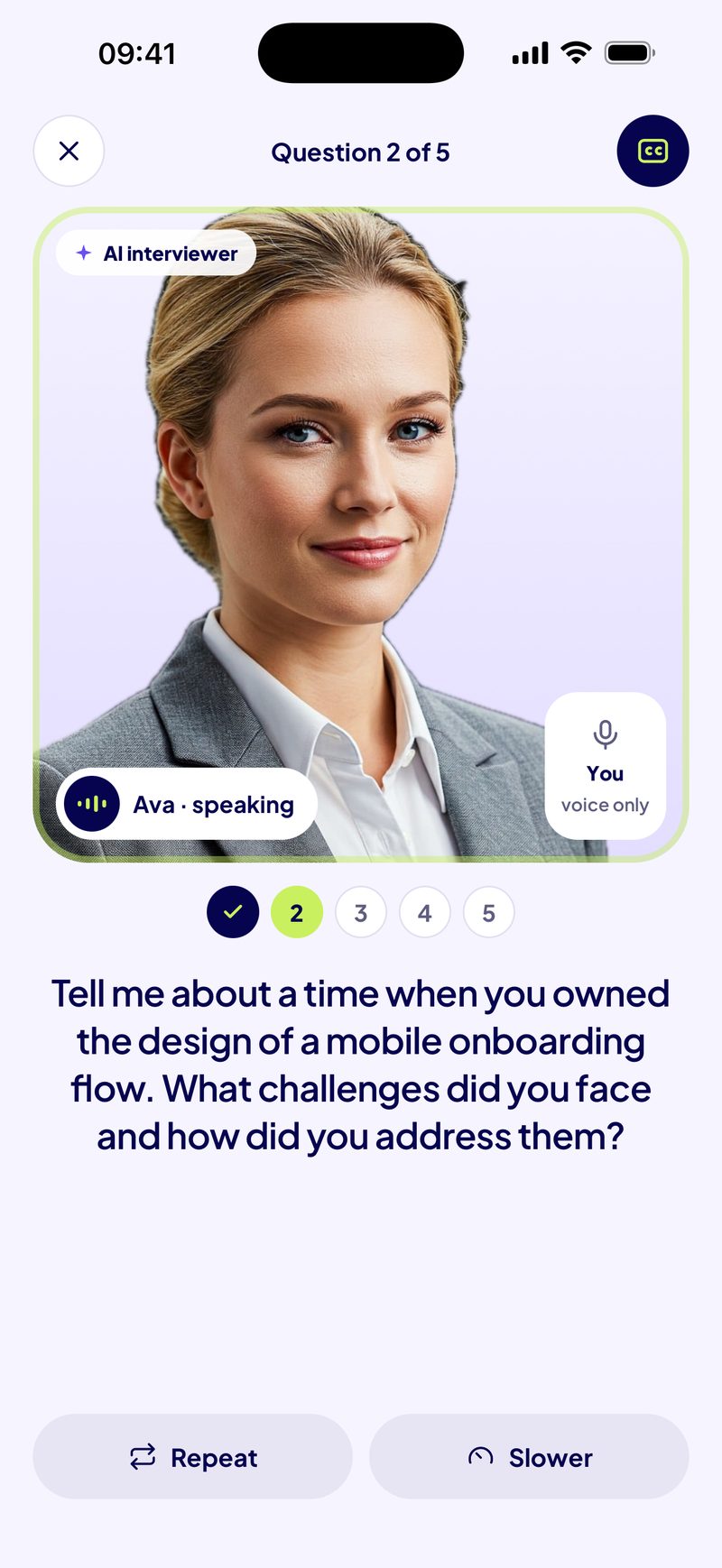
This is the question people stumble over most when they say it aloud, because the honest answer feels uncomfortable. Say yours several times, time it, and listen for hedging words. Readyo is an iPhone app that asks interview questions out loud with an AI interviewer, then scores your answers and shows a better version built only from what you said. It is practice only; the app is free to download and interviews are paid.
More guides: Tell me about yourself · Behavioral questions · Phone and video interviews
Frequently asked questions
What is a good weakness to say in an interview?
A real one that is not essential to the job, such as delegating, public speaking or a tool you are still learning. Pair it with what you are doing about it.
Should I say “I’m a perfectionist”?
It is best avoided. Interviewers hear it so often that it can sound like a disguised strength rather than an honest answer.
How long should my answer be?
About 45 to 60 seconds: one sentence naming the weakness, one example, and most of the time on what you do about it.
Is “greatest weakness” the same as “areas for improvement”?
Yes. “What would you like to improve?” and “what would your manager say you should work on?” are the same question and the same structure applies.