Three formats, three skills
- Phone screen. Short, usually with a recruiter. They only hear you, so clarity, pace and a clear summary of your background carry everything.
- Live video interview. Like an in-person interview on a screen. Setup, eye line and not talking over the other person matter.
- One-way (recorded) video. You answer written or spoken questions to a camera with a time limit and often no second try. Structure and timing matter most.
Setup checklist
- Test the tool early. Join a test call with the app the company named, a day before.
- Check sound first. Use headphones with a microphone if you can. Bad audio hurts more than a bad background.
- Choose a quiet place and tell people nearby. Silence your phone and close other tabs.
- For video, put the camera at eye level with light in front of you, not behind.
- Keep notes out of sight but close: the job ad, three examples with results, and your questions for them. Do not read from a script.
- Have a backup. A second device, or the interviewer’s number, in case the connection drops.
How to speak when no one can see you
- Slow down a little. Without facial cues, people follow pace more than usual.
- Give a signpost. “There are two parts to that…” helps a listener who cannot read your face.
- Pause, don’t fill. A one-second pause reads as thoughtful; a string of “um” does not.
- Keep answers short (about 60 to 90 seconds) and stop. Let them ask more.
- Smile when you speak. It changes your voice, even on a phone call.
Common phone screen questions
- Tell me about yourself. (how to answer)
- Why are you interested in this role and this company?
- What are you looking for in your next job?
- What is your current situation and notice period?
- What are your salary expectations?
- Do you have any questions for me?
A one-week practice routine
- Day 1. Write your answer to “tell me about yourself” and say it aloud, timed.
- Day 2. Choose three examples with results from your experience.
- Day 3. Say the common questions above out loud, without notes.
- Day 4. Record yourself and listen back for pace, filler words and length.
- Day 5. Run a full mock interview, then redo the weakest answers.
- Day 6. Test the call setup and sound with a friend.
- Day 7. Rest, then a short warm-up run before the interview.
Practice with Readyo
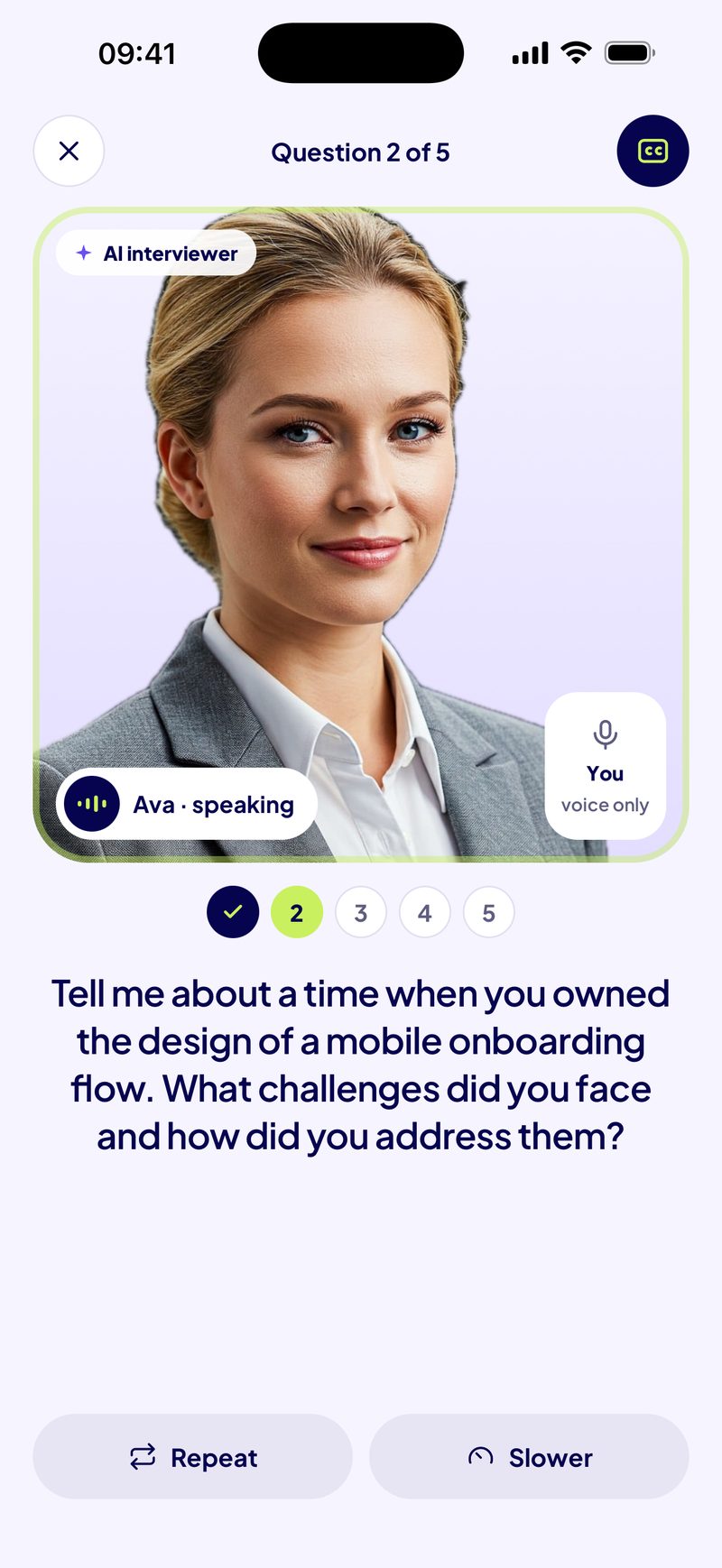
Readyo is an iPhone app for spoken mock interviews. An AI interviewer asks the questions out loud and follows up, you answer by voice, and the report scores relevance, structure, evidence and precision, clarity and composure from what you said and when, never from your accent. It shows a better version of each answer built only from your own words. It is practice only, and does not simulate a particular video platform. It is free to download, and interviews are paid.
More guides: Mock interview practice · Behavioral questions · Greatest weakness
Frequently asked questions
How is a phone interview different from a video interview?
On the phone only your voice is heard, so clarity, pace and structure carry the answer. On video, setup, eye line and not interrupting also matter.
How do I prepare for a one-way recorded video interview?
Practise answers of 60 to 90 seconds with a clear structure, check your camera and sound, and rehearse the time limit, since you often cannot redo an answer.
How long does a phone screen last?
Often 15 to 30 minutes, though it varies by company. Ask the recruiter beforehand if you want to know.
Can I use notes in a phone interview?
Keep brief notes such as three examples and your questions, but do not read from a script: it is easy to hear.